
Gearing choice is really about how much involvement you want from the bike.
Some riders enjoy managing gears and feeling every mechanical change. Others want the bike to handle that side of things so they can focus on riding. Neither is right or wrong, but choosing the wrong approach for you will quickly become frustrating.
If you get the gearing right, the whole bike feels easier to live with. If you get it wrong, even a great motor and battery won't fix it.
Even though an e-bike has a motor, it still needs gears.
The motor helps you pedal, but it doesn't replace the job gears do. Much like in a car, gears allow the bike to work efficiently across different speeds, hills, and loads. Without the right gearing, the motor would struggle on climbs and feel inefficient on flatter ground.
That's why gearing choice has such a big impact on how an e-bike feels in everyday use.
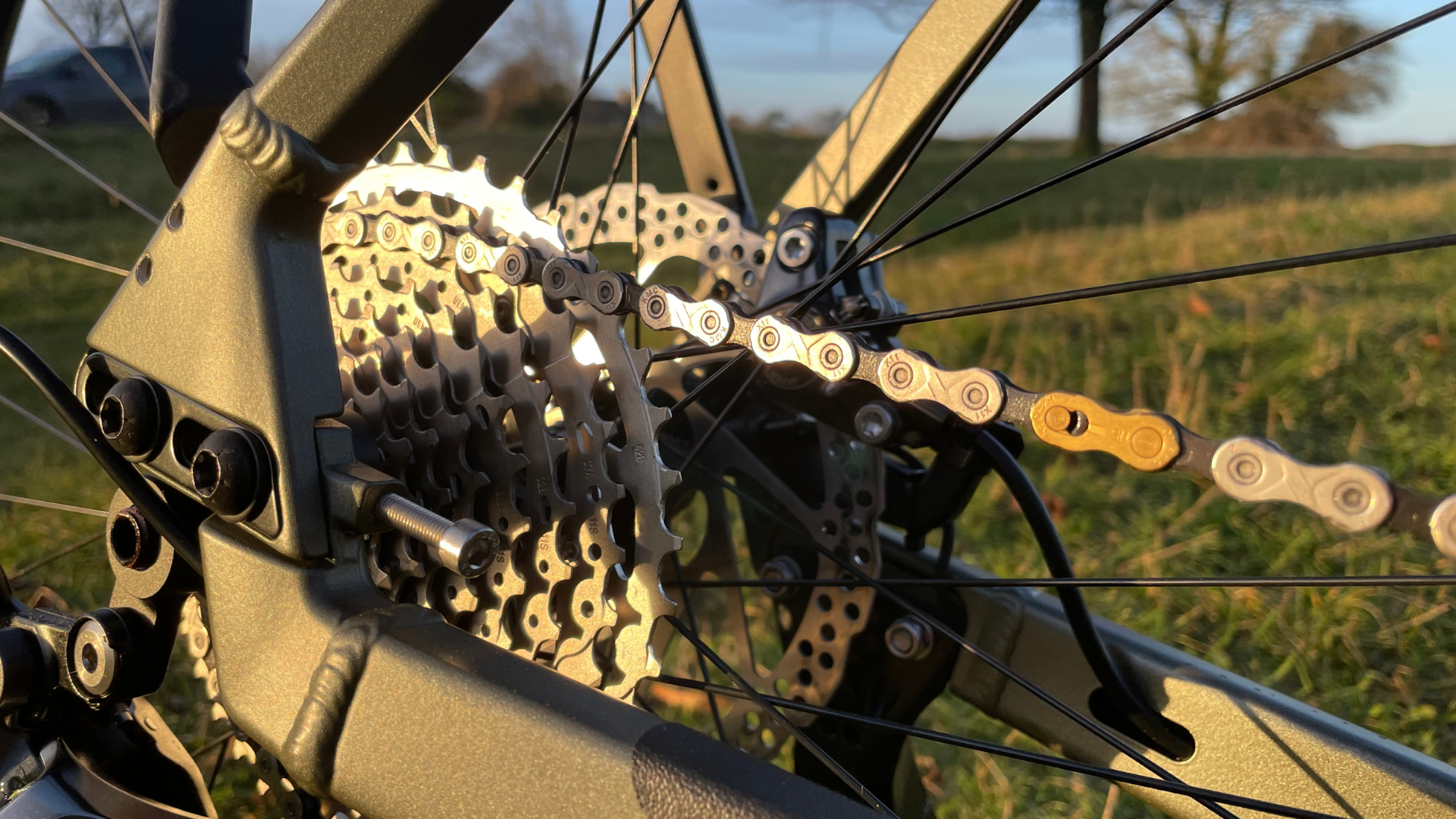
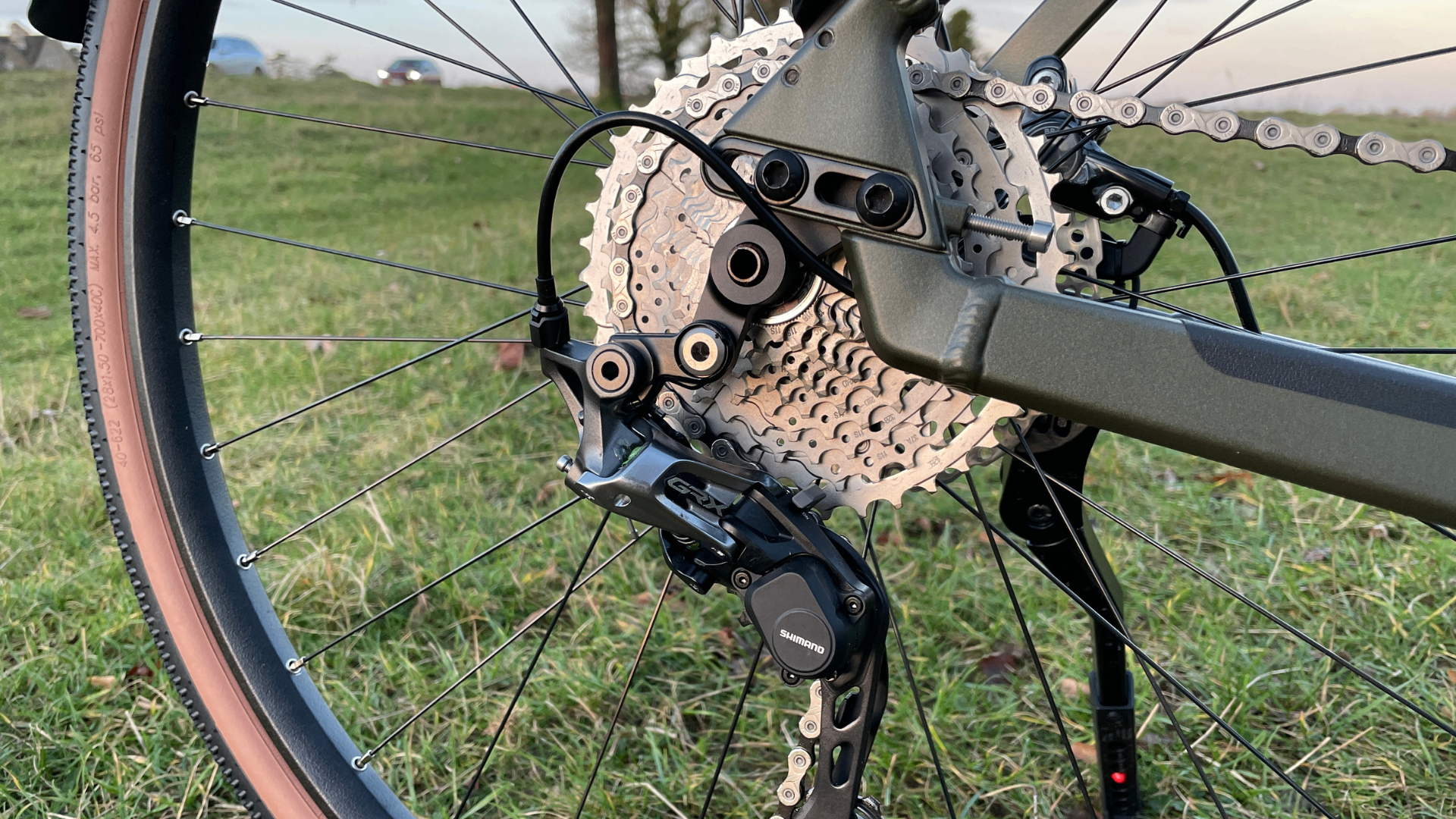
Shimano cassette and chain on the UBN Five, a classic derailleur setup
Key takeaways
- Gearing affects how much attention the bike asks of you while riding
- Hub gears (Enviolo, Rohloff) offer sealed, low-maintenance, smooth shifting
- Derailleur systems are lighter and cheaper but need regular upkeep
- Pinion MGU combines motor and gearbox for ultimate integration
- The right choice depends on your terrain and how involved you want to be
Explore the Detail
Internally geared hubs move all the gearing inside a sealed unit at the rear wheel. This protects the working parts from dirt and weather, which immediately makes them more consistent and lower maintenance than derailleur systems.
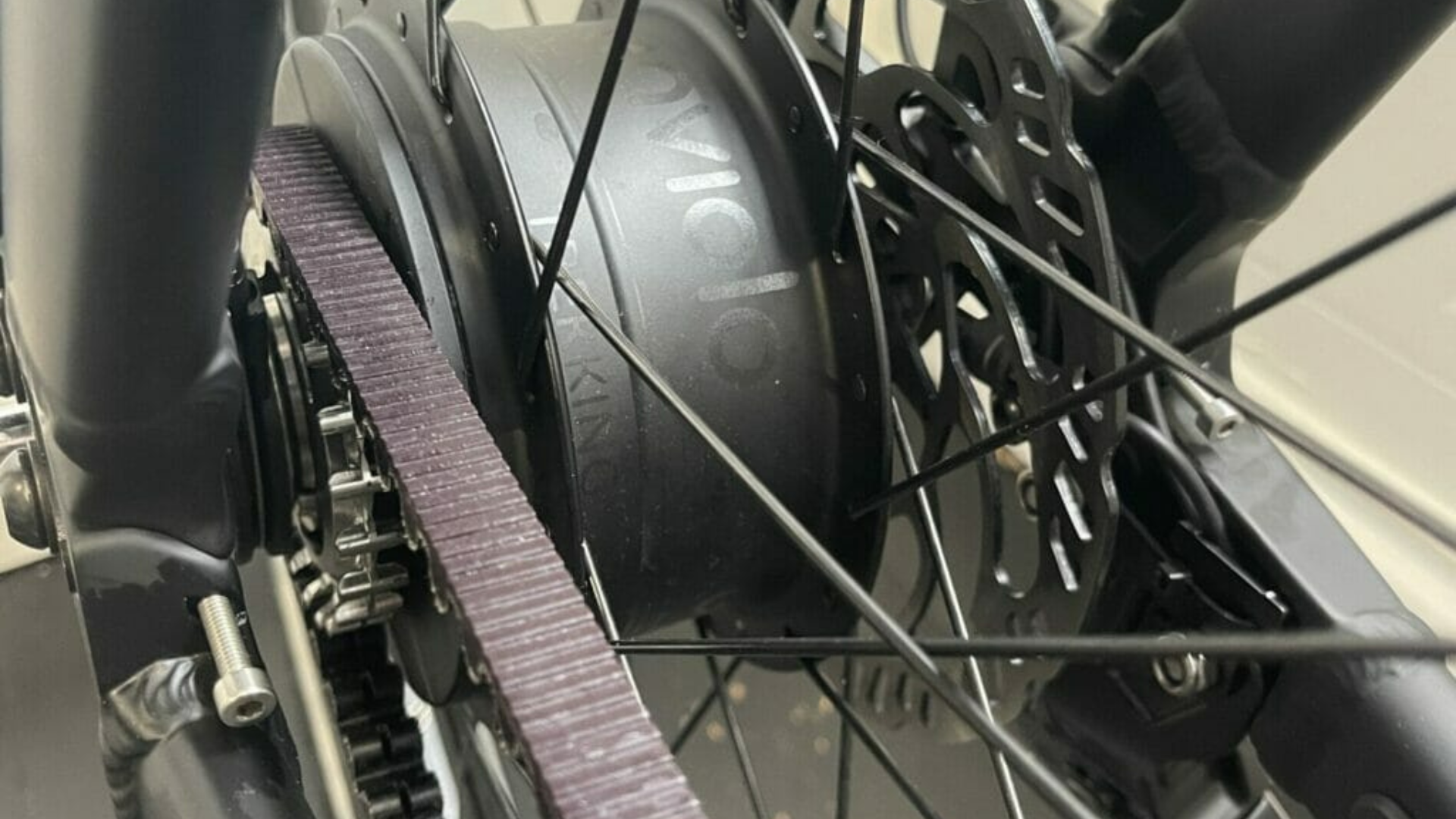
Enviolo hub with belt drive. Sealed, smooth, and low maintenance
The two hubs you'll find on Riese & Müller bikes are the Enviolo and the Rohloff. They're very different despite both being internally geared hubs.
How They Actually Work
The Rohloff is a planetary hub gear, a highly engineered set of cogs, clutches and pawls that create 14 individual gears. It provides a 526% gear range, weighs 1.82kg, and has a reputation for extraordinary longevity. It's the benchmark for sealed hub gear systems.
The Enviolo is a CVT, continuously variable transmission. Instead of distinct gears, it uses tilting ball bearings between two orbital rings to generate an infinite range of ratios within its 380% range. There are no gear steps at all. You twist the grip and the resistance changes smoothly. It weighs around 2.5kg (roughly 700g heavier than Rohloff) and creates slightly more drag in the drivetrain.
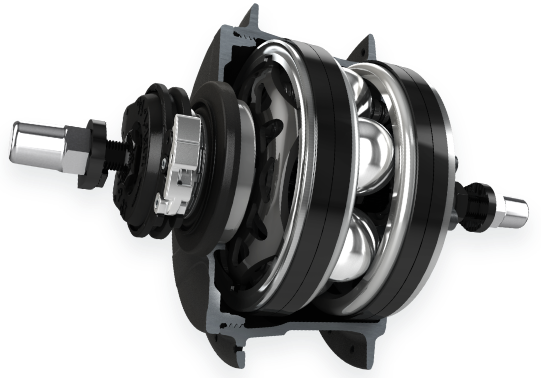
Inside an Enviolo CVT hub. No fixed gear steps
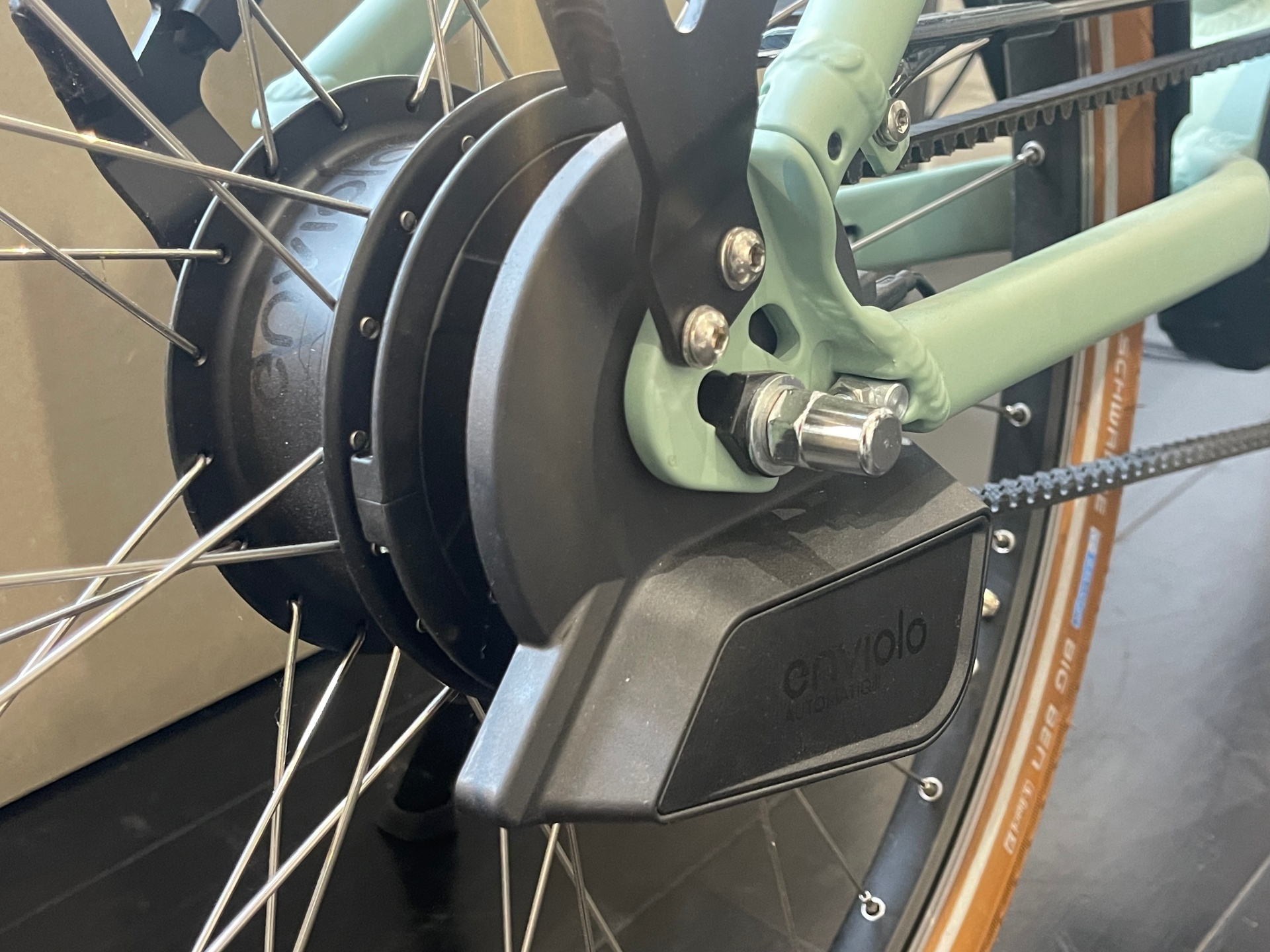
Enviolo Automatiq. Automatic shifting that adapts as you ride
The Gear Range Difference
This matters more than most people realise. The Rohloff's 526% range gives you 14 gears from very easy to very hard. The Enviolo's 380% range is significantly narrower. Its easiest gear is equivalent to roughly gear 6 on the Rohloff. In simple terms, the Enviolo gives you the same spread as using only the upper 9 gears of the Rohloff.
On flat terrain and moderate hills, you won't notice this. On steep climbs, long rides in lower power modes, or when carrying heavy loads, the Rohloff's extra range at the easy end makes a real difference. The motor can compensate, but it uses more battery to do so.
Cost
This is the biggest practical difference. The Rohloff E-14 system costs roughly £1,800–£2,000 as a component. The Enviolo costs around £600 for a manual hub, or £900 for the Automatiq (auto-shifting) version. That price difference flows directly into bike prices. On current R&M Gen5 models, stepping from Enviolo Vario to Rohloff adds roughly £2,000–£2,500 to the bike price.
Lifespan
The Rohloff is expected to last 60,000–70,000 miles before anything mechanical needs attention. The Enviolo typically reaches 20,000–30,000 miles before it needs replacing. So the Rohloff costs three times more but lasts roughly three times longer. The cost per mile is surprisingly similar. For riders doing high mileage (commuting daily, touring regularly), the Rohloff's longevity makes a stronger financial case. For riders doing moderate mileage (a few rides a week, shorter distances), the Enviolo's lower upfront cost makes more sense.
Dan's Note
The Enviolo is a lovely hub. Smooth, intuitive, and great for riders who want ease of use on flatter terrain. But we actually sell far more Rohloff than Enviolo, and there's a reason for that. Once hills get involved, the Rohloff's wider gear range and efficiency make a real difference. It's expensive, but I've never had a customer regret choosing it. If your riding involves any kind of gradient, it's worth every penny.
Common Questions
Can I shift gears while stationary on an e-bike?
It depends on the gearing system. Hub gears (Enviolo, Rohloff) and the Pinion MGU can all shift while stationary, which is genuinely useful in stop-start town riding. You can come to a complete stop at a junction and drop into a lower gear before setting off again.
Derailleur systems need the chain to be moving to shift, so you need to anticipate and shift down as you approach a stop. This is one of the practical reasons hub gears suit commuters so well.
Will a derailleur wear out faster on an e-bike than on a normal bike?
Yes, typically. E-bikes put more force through the drivetrain because the motor adds power through the same chain and cassette. That means chains and sprockets wear faster, especially if you ride through winter salt and grit without regular cleaning.
This is one reason I often recommend hub gears with a belt drive on bikes that will be used daily. If you prefer a derailleur setup, just budget for more frequent chain and cassette replacements and keep the drivetrain clean.
What is automatic shifting and is it worth it?
Automatic shifting lets the bike change gear for you based on your speed and cadence. On Bosch systems paired with Enviolo or Rohloff hubs, it works well and makes the ride noticeably calmer. You just pedal and steer. The Pinion MGU also supports automatic shifting, integrated directly into its motor-gearbox unit, which makes it particularly seamless on hilly or off-road routes.
It is particularly useful for riders who want the bike to "just work" without thinking about gear timing. Some experienced cyclists find it takes a bit of getting used to, but most people who try it end up preferring it.
If you want a completely fuss-free ride, it is worth considering.
Is a belt drive quieter than a chain?
Noticeably. Belt drives produce very little noise, even in wet conditions. A well-maintained chain is fairly quiet too, but as it wears or gets dirty the noise increases.
Belt drives paired with hub gears (especially Rohloff with automatic shifting) create some of the quietest e-bike setups available. If a smooth, refined ride matters to you, belt drive is worth the investment.
Do I need to oil a belt drive?
No. This is one of the main advantages. Belt drives do not require lubrication, and they do not attract dirt the way a greasy chain does. You can wipe them clean with a damp cloth if needed, but most of the time you can simply ignore them.
They last significantly longer than chains too, often tens of thousands of miles before needing replacement.
Let us find the deals for you.
Stop refreshing the page. Tell us where to send the alerts, and we'll do the heavy lifting.
- •Instant Notifications: Be the first to know when limited-time offers go live.
- •Curated for you: We filter the noise and only send the "must-see" bikes and tech.
- •Insider Knowledge: Expert advice on what's actually worth buying right now.
Ready to see specific bikes?
Now you know the difference between derailleur, hub gears, belt drive and Pinion: here are bikes that use each setup.
IF YOU'RE UNSURE HOW MUCH INVOLVEMENT YOU WANT FROM THE BIKE, START WITH THE BIKE FINDER.
If gearing choice feels abstract now, it quickly becomes very real once you start riding hills, traffic, or mixed terrain.