

Comfort is not a luxury. It's what determines whether you enjoy riding your bike or slowly stop using it.
Most discomfort doesn't come from riding "too far". It comes from poor fit, poor contact points, or a riding position that doesn't suit how you actually ride.
A comfortable e-bike should feel welcoming from the first mile and still feel good hours later. If you're constantly shifting around, standing up to relieve pressure, or thinking about aches and pains, something isn't right.
Get comfort and fit right and everything else works better. You'll ride more often, ride further, and enjoy the bike for what it's meant to be.
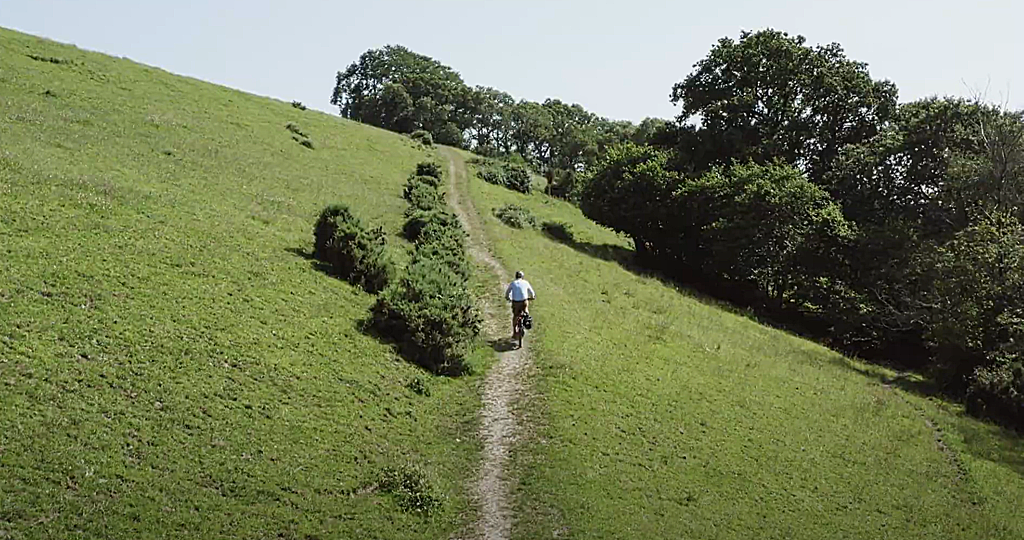
Where you connect with the bike: saddle, grips, and bars shape how every ride feels
Key takeaways
- Comfort is a system: geometry, contact points, and suspension working together
- Geometry (how you sit on the bike) matters more than adding soft parts later
- A firmer, well-supported setup is often more comfortable than a soft one
- Saddles and grips are personal and easy to fine-tune
- A bike that fits you on day one will still fit years later
Explore the Detail
Riding position shapes everything about how a bike feels.
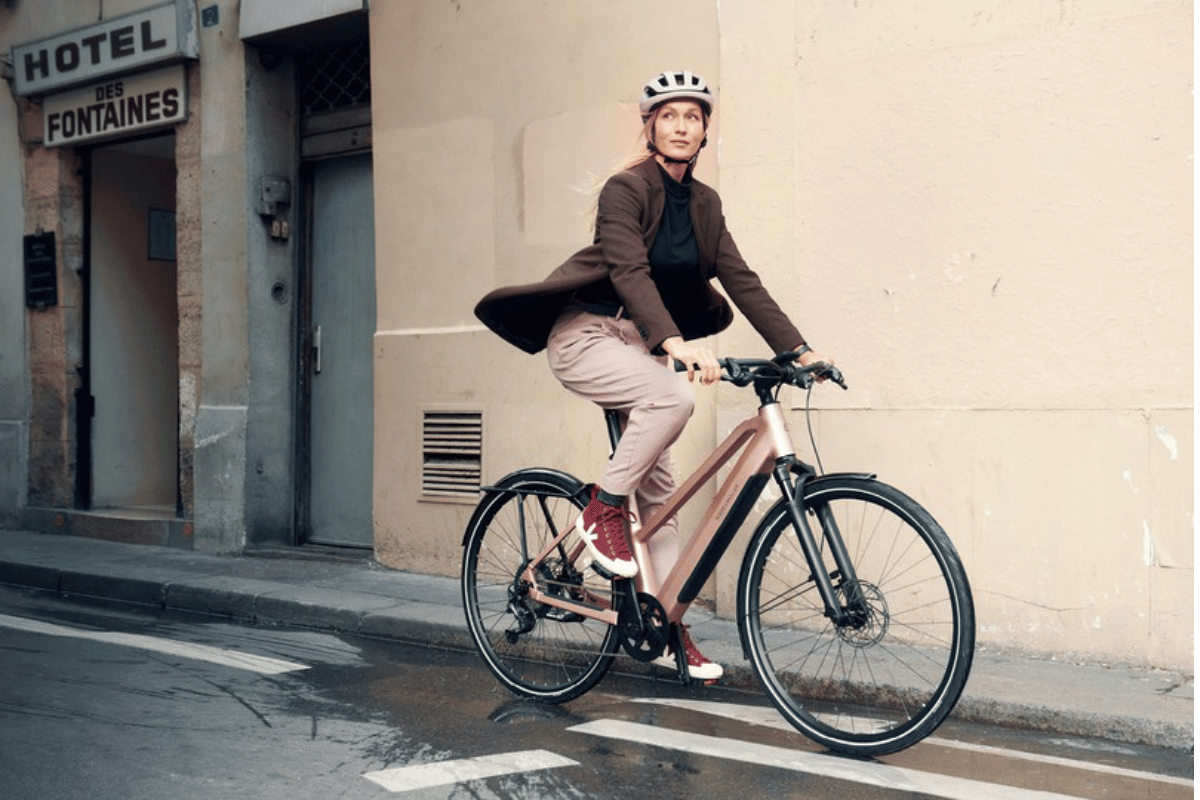
Relaxed, upright riding position. Comfortable from the first mile
A more upright position reduces pressure on your hands, neck, and lower back. A more forward position can feel efficient and sporty but demands more from your body.
Neither is "right" or "wrong". What matters is how long you can hold that position comfortably.
Many premium e-bikes are designed with relaxed, confidence-inspiring geometry because they're intended to be ridden for longer and more often. This also makes them easier to control at lower speeds and when carrying weight.
If a bike feels demanding just to sit on, it will only feel worse over time.
"Comfort starts with how you sit, not what you add later."
Common Questions
How do I know what frame size to choose?
Frame sizes across different models and brands cannot always be used as a direct comparison. The frame size is just a measurement on part of the frame, from the centre of where the crank arm attaches to the motor, up to the top of the seat tube where the seatpost slots into the frame. If the manufacturer positions the motor differently in the frame design or makes the seat tube longer, this changes the 'size' of the bike without having any effect on the standover height or reach of the bike.
The best approach is to look at the guidance from the manufacturer for each specific model, and talk to us if you are between two sizes. We will ask about your height, inside leg, and how you want to ride, then recommend the right fit.
Is a step-through frame less stable than a traditional frame?
No. Modern step-through and low-step frames are engineered to be just as rigid and stable as traditional diamond frames. Riese & Muller's Homage and Nevo are step-through designs that perform brilliantly on demanding rides.
The frame style affects how easy the bike is to mount and dismount, not how it handles. If you prefer the confidence of easy access at stops, a step-through is a great choice without any compromise in ride quality.
Do I need full suspension?
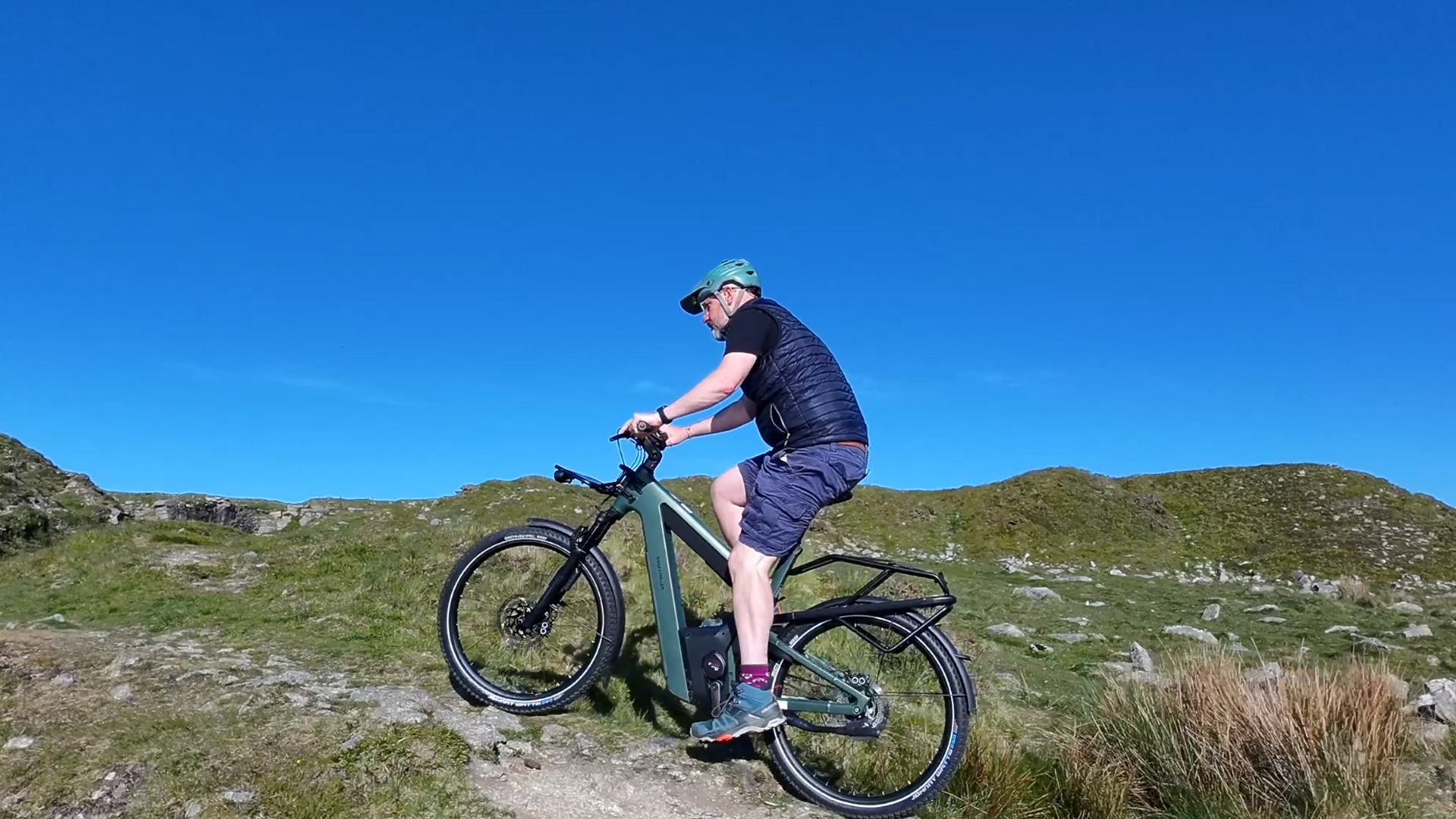
Not necessarily. Full suspension adds comfort on rough surfaces and long rides, but it also adds weight, cost, and complexity. For road and cycle path riding, a good hardtail with decent tyres and a suspension seatpost can be very comfortable.
Full suspension really comes into its own on rougher tracks, bridleways, and longer mixed-terrain rides. If you are mostly on tarmac, you probably do not need it. If you ride off-road regularly or want maximum comfort over distance, it is worth the investment.
Are e-bikes too heavy to handle?
E-bikes are heavier than traditional bikes, but the weight is carried low (motor and battery are near the bottom bracket) which keeps the bike stable and predictable. Once you are moving, you barely notice the extra weight because the motor compensates. If you want the actual numbers before you decide, I've listed how much these bikes actually weigh across the range.
Low-speed handling takes a short adjustment period, but most people adapt within the first ride. If weight is a concern for storage or transport (carrying up stairs, lifting onto a car rack), that is worth factoring in, and we can help you choose accordingly.
Can I adjust the riding position after purchase?
Yes, to a degree. Saddle height, saddle angle, handlebar angle, and grip position can all be adjusted. Some bikes allow stem height changes too. Saddles and grips can be swapped easily if the originals do not suit you.
What cannot be changed is the fundamental frame geometry, which is why getting the right frame and size is so important at the point of purchase. The fine-tuning is straightforward after that.
Let us find the deals for you.
Stop refreshing the page. Tell us where to send the alerts, and we'll do the heavy lifting.
- •Instant Notifications: Be the first to know when limited-time offers go live.
- •Curated for you: We filter the noise and only send the "must-see" bikes and tech.
- •Insider Knowledge: Expert advice on what's actually worth buying right now.
Ready to see specific bikes?
Comfort starts with the right frame geometry and suspension. These bikes are designed for different riding positions and body types.
IF COMFORT IS A PRIORITY, THE BIKE FINDER HELPS STEER YOU TOWARD THE RIGHT SIZE AND SETUP.
A bike that fits you properly is far more likely to be ridden often and enjoyed long-term than one chosen purely on specs.