
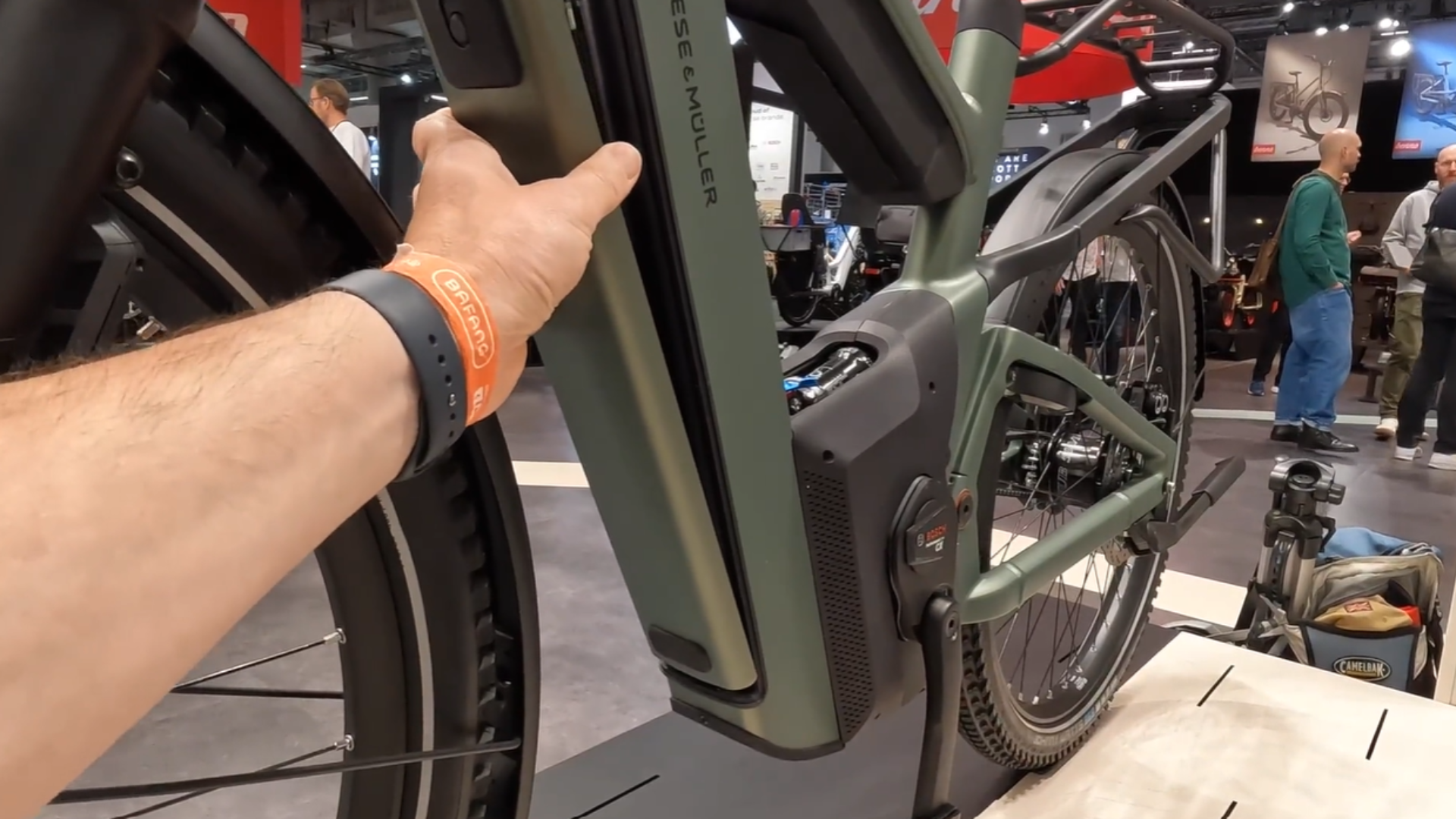
Range anxiety is mostly a misunderstanding.
Most people don't run out of battery because the battery is too small. They run out because they don't understand what affects range and what doesn't.
A good battery setup should feel reassuring, not restrictive. You shouldn't be constantly checking percentages or planning rides around charging points.
If you choose the right battery size for how you actually ride, range quietly stops being a problem.
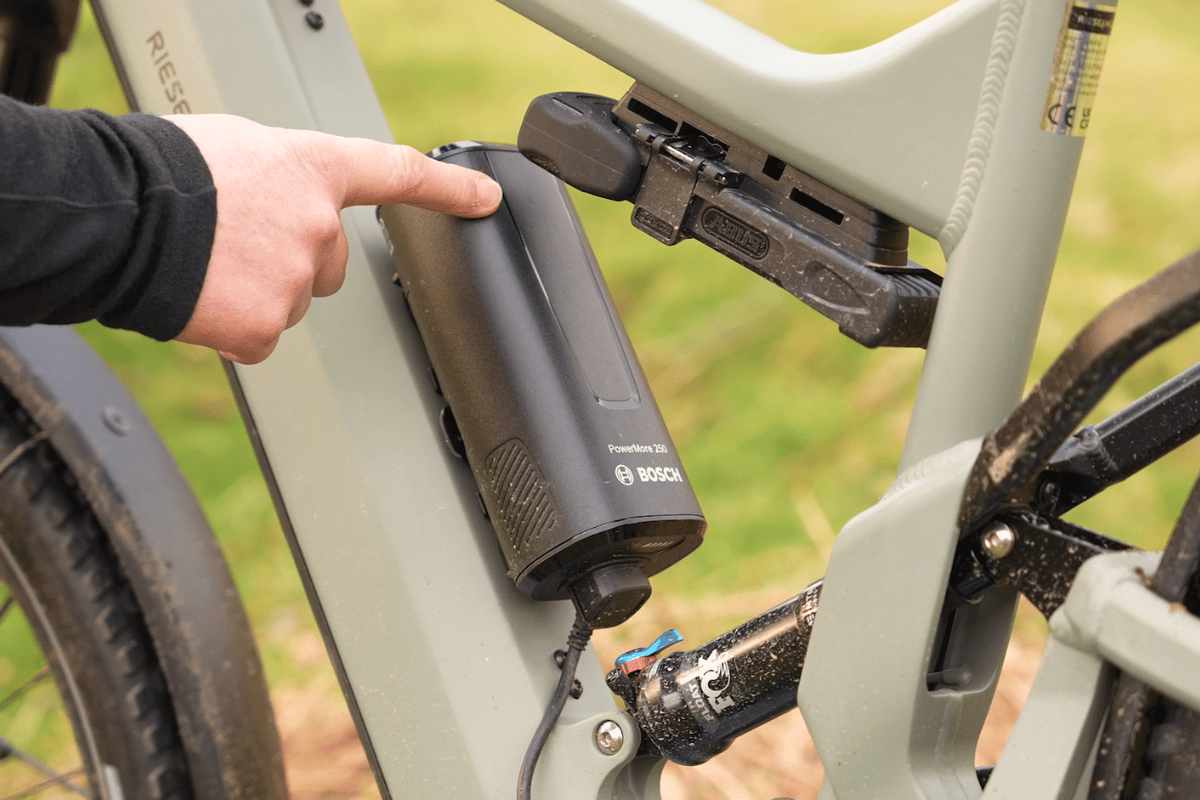
Battery placement affects both range and how the bike feels to ride
Key takeaways
- Range is a variable, not a fixed number from a spec sheet
- Hills, assistance level, and riding style affect range more than battery size alone
- The goal is "comfortable margin", not maximum range
- Dual battery systems offer confidence, not just extreme mileage
- A calm riding style often adds more range than a bigger battery
Explore the Detail
Battery capacity is measured in watt-hours (Wh). Put simply, this tells you how much energy the battery can store.
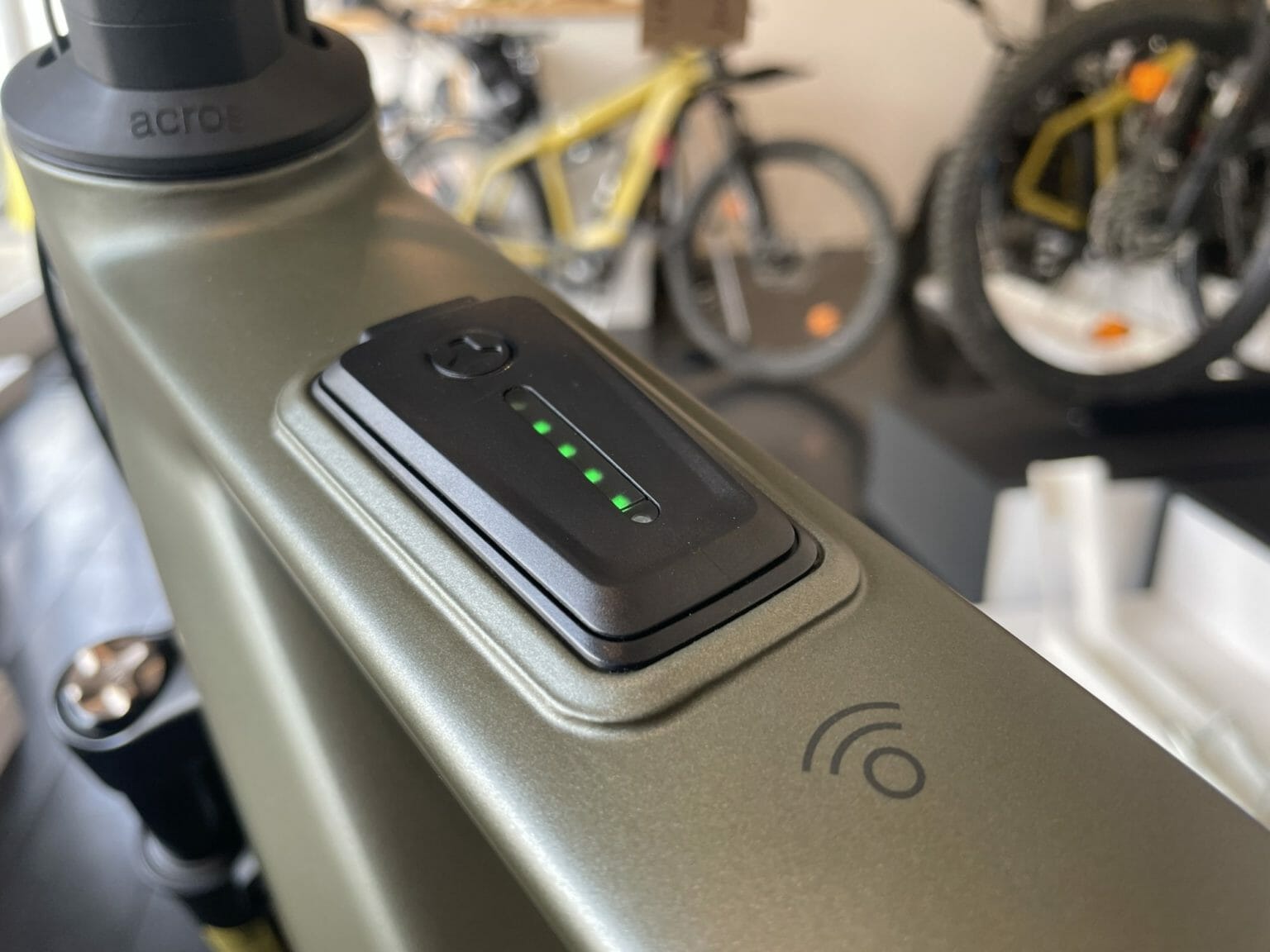
Integrated battery indicator LEDs. A quick glance tells you how much charge remains
A larger number means more available energy, which usually translates to more range or the ability to use higher assistance levels for longer.
What it doesn't tell you is how far you'll go. Two riders on the same battery can see very different ranges depending on terrain, riding style, assistance mode, and how smoothly the system is working. Wh is a useful comparison tool, but it's not a promise.
"Watt-hours tell you how much energy you have, not how far you'll go."
Common Questions
How long does a battery last before I need to replace it?
A well cared for battery should last the lifetime of the bike for most riders. Bosch provide a battery and motor warranty for two years or 500 charge cycles, whichever comes first.
To put that in context, one charge cycle on an 800Wh battery gives you roughly 80 miles of riding. That means 500 cycles is approximately 40,000 miles. Most people are doing significantly fewer miles than that over the lifetime of their bike.
Does cold weather affect range?
Yes. Cold temperatures reduce effective range. This is normal battery behaviour, not a fault. The components are designed to work down to around -10 degrees Celsius.
On cold days, I recommend storing and charging the battery at room temperature overnight, then reinserting it just before you ride. The current drain during use warms the battery up, so you can still achieve a good range. Planning slightly shorter trips or using a lower assistance level in winter is sensible.
How long does it take to charge an e-bike battery?
A full charge from empty takes roughly 4 to 6 hours depending on the battery size and charger. But you rarely charge from completely flat. Topping up from 30% to full is noticeably quicker.
Bosch also offer a fast charger that reduces charge times. For most people, plugging in overnight becomes the routine and you never really think about it.
Can I ride in the rain without damaging the battery?
Yes. All the bikes we sell are designed to be ridden in wet conditions. The battery, motor, and electrical connections are sealed and weather-resistant.
You should not submerge the bike or jet wash directly into electrical connections, but normal rain, puddles, and wet roads are absolutely fine. These are bikes designed for the UK, not fair weather toys.
Is it worth getting a dual battery setup?
For most riders, a single battery in the right size is enough. Dual battery setups are worth considering if you regularly ride very long distances (60 miles plus), ride in very hilly terrain, carry heavy loads, or want the peace of mind of significant range margin.
A dual 800Wh setup gives you roughly 160 miles of riding, which is more than most people will ever need in a day. If you are unsure, start with a single battery. You can always add a range extender later.
What does Wh mean and how do I compare batteries?
Wh stands for watt-hours and it tells you how much energy the battery stores. It is the most useful number for comparing batteries. A 750Wh battery stores more energy (and therefore gives more range) than a 500Wh battery, all else being equal.
A quick rule of thumb: divide the Wh by 10 to get a rough estimate of range in miles. So a 750Wh battery gives you approximately 75 miles. Real-world range varies based on terrain, weight, assistance level, and conditions, but it is a useful starting point.
Let us find the deals for you.
Stop refreshing the page. Tell us where to send the alerts, and we'll do the heavy lifting.
- •Instant Notifications: Be the first to know when limited-time offers go live.
- •Curated for you: We filter the noise and only send the "must-see" bikes and tech.
- •Insider Knowledge: Expert advice on what's actually worth buying right now.
Ready to see specific bikes?
Worried about range? These bikes offer some of the largest battery options available, including dual-battery setups pushing 1,000+ Wh.
IF RANGE IS A WORRY, THE BIKE FINDER HELPS MATCH BATTERY SIZE TO HOW YOU ACTUALLY RIDE.
Range anxiety usually comes from misunderstanding how batteries behave in real conditions, not from choosing the wrong size outright.